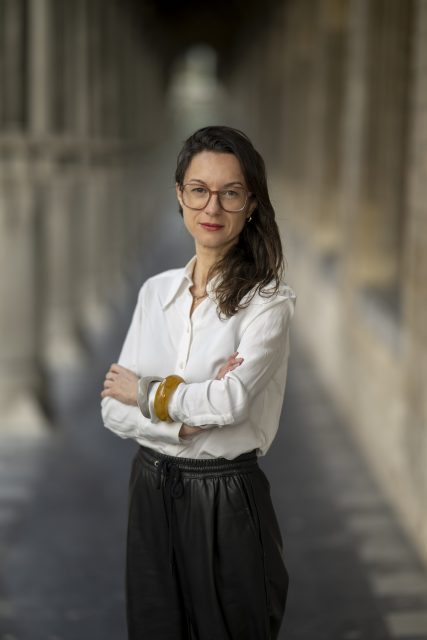
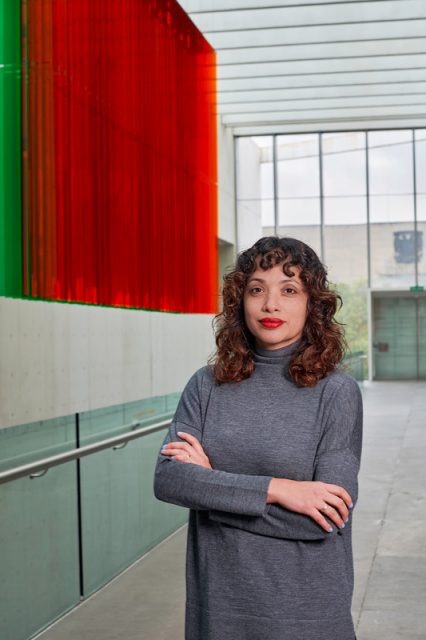
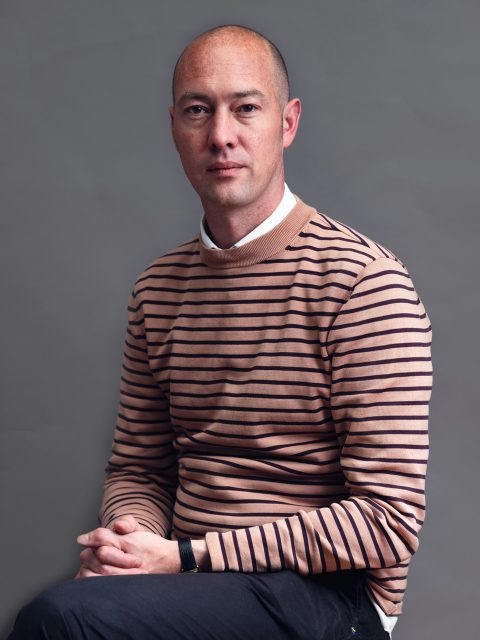
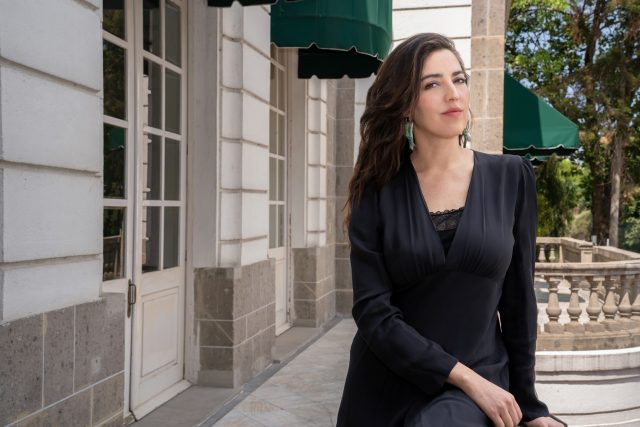
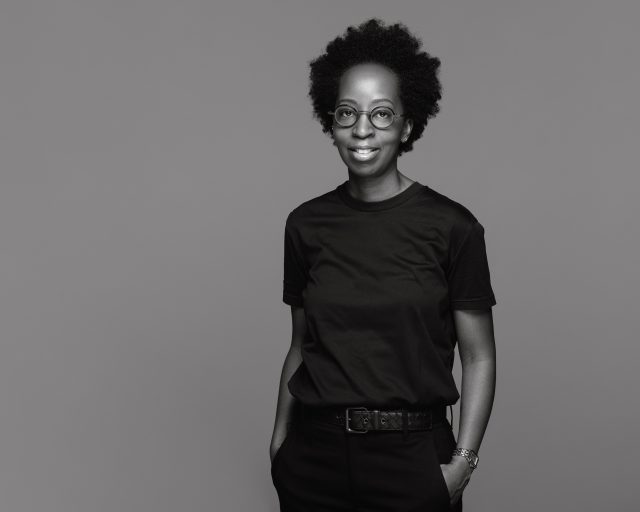
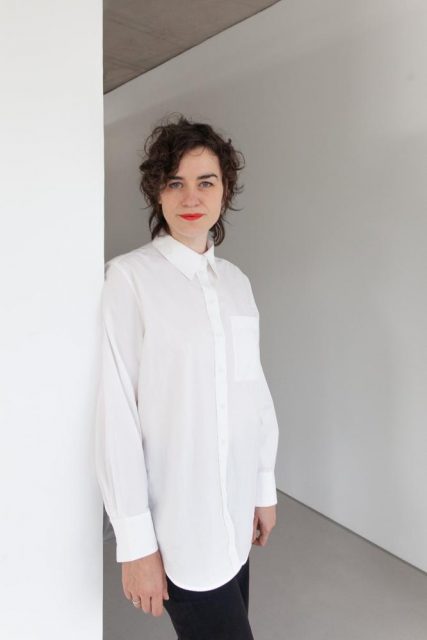
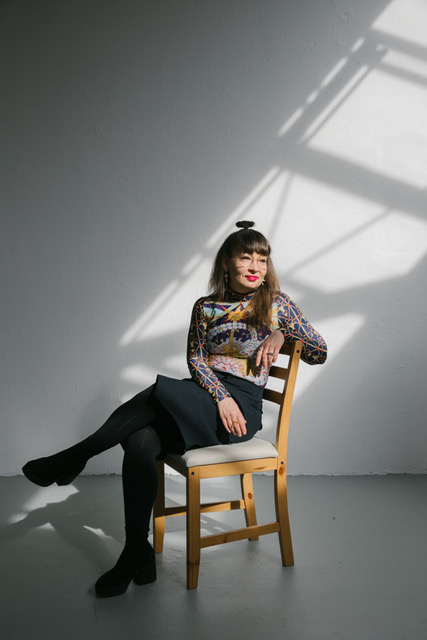
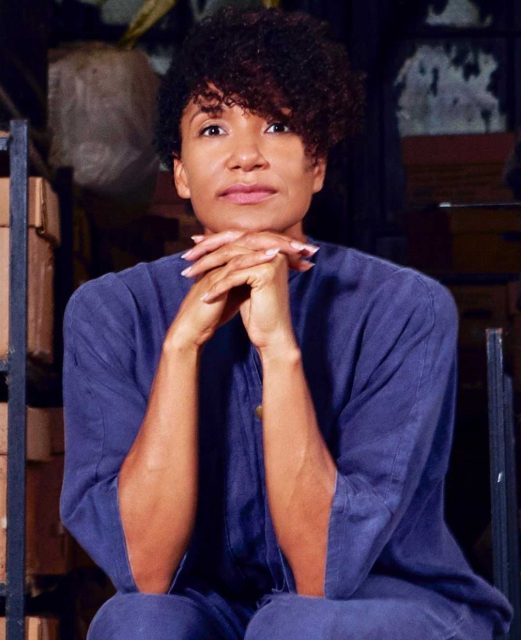
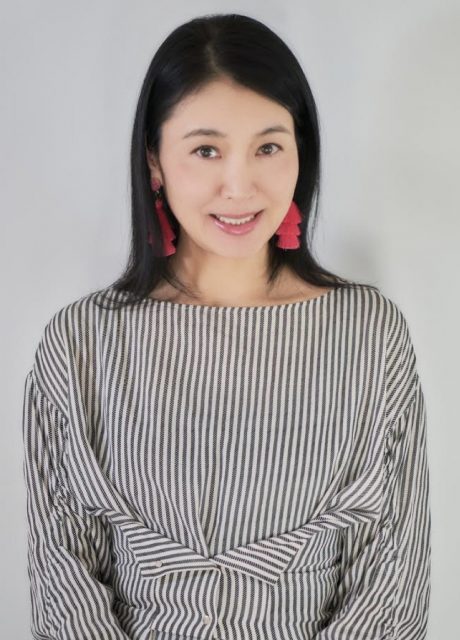
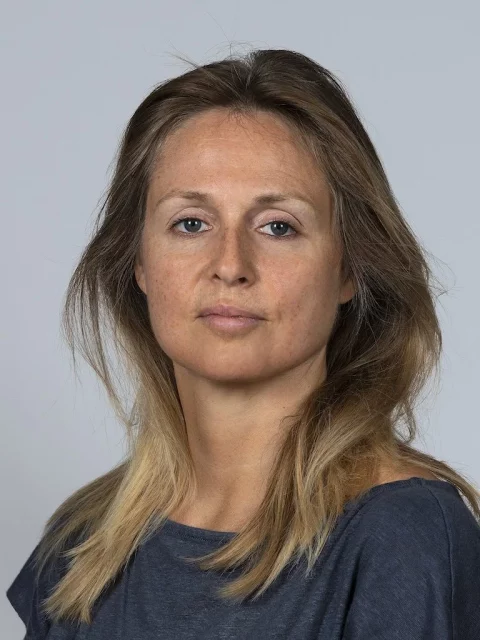
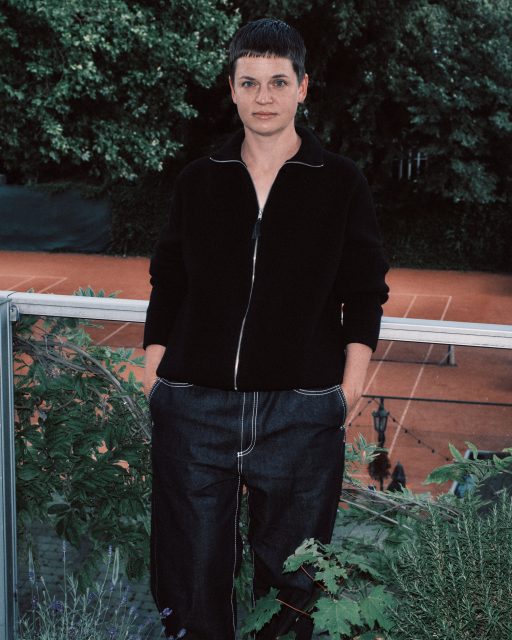
Magalí Arriola is a writer and curator based in Mexico City. For more than thirty years her projects have navigated the intersection of art and politics, championing how artistic practices reveal broader social, economic, and historical contexts. With an eye for critiquing institutional histories and revealing power structures in the afterlives of colonial and capitalist systems, Arriola’s multi-nodal initiatives such as A Place out of History, (2010/2018) and The Missing Circle(2017-2020) are long-term, episodical projects that challenge normative narratives and foster transnational dialogues. Through leadership at institutions such as Museo Tamayo in Mexico City (Director, 2019-2025), ArtBasel Miami (Meridians, 2019-2023), and KADIST collection in San Francisco and Paris (Lead Curator for Latin America, 2017-2020), she has consistently supported experimental practices that question how meaning is produced and disseminated in both local and global art circuits. Arriola was curator of the Mexican Pavillion at the 58 Venice Biennial (2019) and the 8th Panama Biennial(2008). Her exhibitions have been presented in institutions such as Museo Tamayo, Museo Jumex, MAM Medellín, MoMA PS1, SMAK, and Kunst Institute Melly (formerly known as Witte de With).
Heidi Ballet is Director of the Contour Biennial and Associate Curator at DE SINGEL in Antwerp. She also teaches at the Royal Academy of Fine Arts Antwerp. Her curatorial practice explores the intersections of art, science, and society, with a particular interest in place, ecology, and political histories. She has developed numerous public art projects, including And So, Change Comes in Waves, a permanent art-and-science outdoor parcours commissioned by KU Leuven. As Artistic Director of the Beaufort Triennial (2018, 2021), she commissioned site-specific works for the Belgian coast by artists including Michael Rakowitz, Jeremy Deller, Sammy Baloji, Nina Beier, Rossella Biscotti, and Raphaela Vogel. In 2017, together with Milena Hoegsberg, she curated the Lofoten Biennale (LIAF), I Taste the Future, which addressed climate change, oil extraction, and local histories through visual art and performance. In 2016, she curated Our Ocean, Your Horizon at Jeu de Paume, Paris, and CAPC Bordeaux. From 2012 to 2015, she was Research Curator at Haus der Kulturen der Welt (HKW) in Berlin, where she worked on After Year Zero and Ape Culture, and served as Assistant Curator of the 2012 Taipei Biennale. Her writing has appeared in Mousse, ArtReview, Art Papers, and Randian. She is a member of the acquisition committee of FRAC Grand Large.
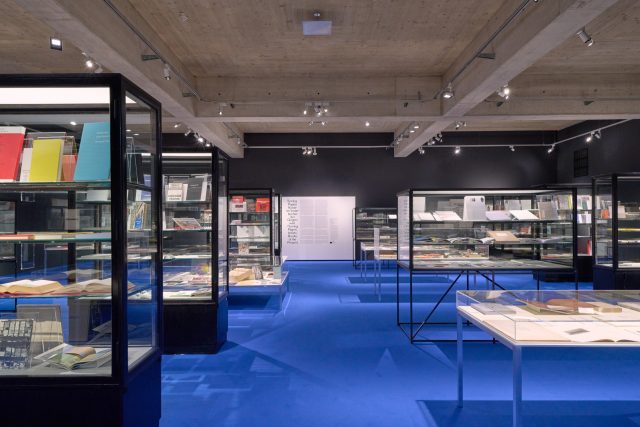
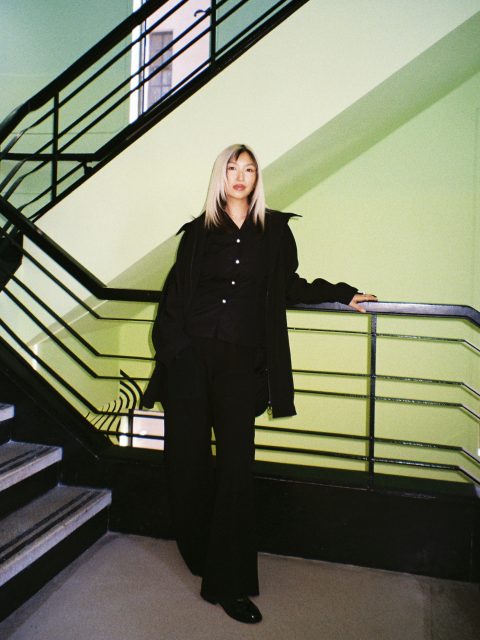
Iwona Blazwick is a curator and writer. Formerly Director of the Whitechapel Gallery, Head of Exhibitions and Displays at Tate Modern and Director of Exhibitions at ICA London, she has curated numerous solo surveys of living and historic artists; and group shows of modern and contemporary art from around the world. She is Lead Curator for Wadi AlFann, Arts AlUla and co-curator of Sculpture in the Garden: The Storytellers at Worcester College, Oxford and has commissioned numerous ‘art in the landscape’ projects. Blazwick was founding editor of Phaidon Contemporary Artists monographs and Whitechapel Gallery/ MIT Documents of Contemporary Art. Her writings on the art and artists of our time have been published worldwide.
Vasyl Cherepanyn is the Curator of the 14th Berlin Biennale for contemporary art (2027). Born in 1980 in Ivano-Frankivsk in Ukraine, and currently lives in Berlin. He holds a PhD in philosophy and has lectured at various universities, including the Cultural Studies Department of the National University of Kyiv-Mohyla Academy, the Institute for Advanced Studies of the Political Critique in Warsaw, University of Helsinki, European University Viadrina in Frankfurt (Oder), and the Krupp Wissenschaftskolleg Greifswald of the Greifswald University. He co-founded the Visual Culture Research Center (VCRC), the institutional organizer of the Kyiv Biennial and a founding member of the East Europe Biennial Alliance (EEBA). Cherepanyn is part of the curatorial team of the Kyiv Biennial, which will conclude with a further chapter at KW Institute for Contemporary Art in 2026 and was previously presented at the Museum of Modern Art in Warsaw, M HKA – Museum of Contemporary Art Antwerp, Dnipro Center for Contemporary Culture, Dovzhenko Centre in Kyiv, and Lentos Kunstmuseum Linz. In 2024, he co-curated Kyiv Perennial at Between Bridges, neue Gesellschaft für bildende Kunst (nGbK), and Prater Galerie in Berlin. He also co-organized iterations of the Kyiv Biennial such as Allied (2021), Black Cloud (2019), The Kyiv International (2017), or The School of Kyiv (2015) and curated the public program Armed Democracy at the Biennale Warszawa (2022), the exhibition Hybrid Peace at Stroom Den Haag (2019), The European International at Rijksakademie van beeldende kunsten in Amsterdam (2018), and Global Protest at the Open University of Maidan (2013), among others. He edited publications such as Society of the Frontline: A Guidebook of Kyiv Perennial (nGbK, 2025), ’68 NOW (Archive Books, 2019), and Guidebook of the Kyiv International (Medusa Books, 2018), and was the co-editor of the Ukrainian edition of the magazine Political Critique from 2011 to 2014.
Laurie Cluitmans
Invited in 2026
Laurie Cluitmans, photo : Iris Duvekot, 2025
Laurie Cluitmans is a curator, writer and researcher. Since January 2026 she works as Director of Nest Hague. Nest is a center for contemporary art in The Hague that explores urgent social, political, and cultural questions through exhibitions, commissions, public programs, and education. Working with local, national, and international artists, Nest develops thematic exhibitions that connect artistic practice to broader societal contexts and lived experience. Before joining Nest, Cluitmans was Curator of Contemporary Art at the Centraal Museum, where she anchored the position of contemporary art through a program that balanced topicality and historical roots; temporary interventions and long-term research programs. Cluitmans curated a.o. transhistorical research exhibitions such as The Botanical Revolution in 2021 for which she compiled and edited the publication On the Necessity of Gardening; An ABC on Art, Botany and Cultivation (designed by Bart de Baets) and Good Mom/Bad Mom in 2025, which was accompanied by Mothering Myths: An ABC on Art, Birth and Care (icw Heske ten Cate). Besides she curated many solo exhibitions, a.o. with Basel Abbas and Ruanne Abou-Rahme, Ansuya Blom, Pauline Curnier Jardin, Rory Pilgrim and Sara Sejin Chang (Sara van der Heide). In addition to her curatorial work Cluitmans is a regular contributor to magazines such as MetropolisM and De Witte Raaf.
Ramesch Daha
Invited in 2024
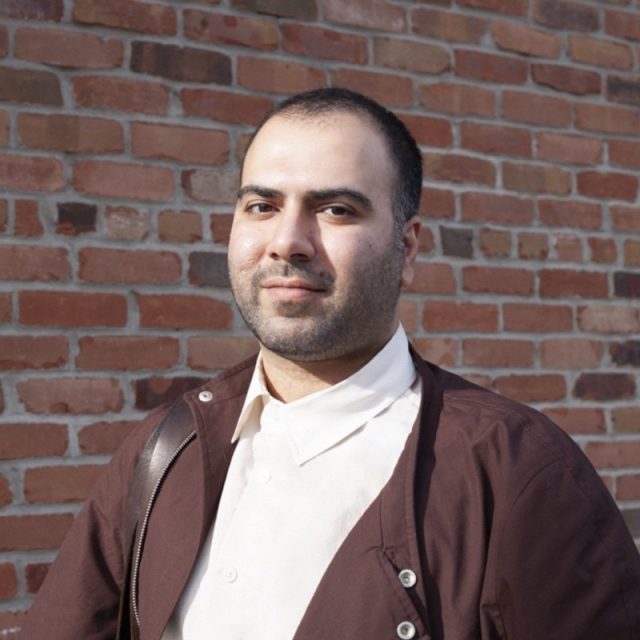
Ramesch Daha, photo : Edyta Dufaj
Max Delany
Invited in 2018
Max Delany, photo : Rowan Chanen, 2026
Max Delany is an independent curator and writer with extensive leadership and curatorial experience across public art museums, contemporary art spaces, universities, publications and the public realm. Max was Artistic Director and Chief Executive Officer at the Australian Centre for Contemporary Art, Melbourne, from 2016–2024. He was formerly Senior Curator, Contemporary Art, at the National Gallery of Victoria, Melbourne (2012–2016), and Director, Monash University Museum of Art (2004–2012). Previous roles have included Director, Gertrude Contemporary (1999–2004); and Curator, Heide Museum of Modern Art (1995–1999). Since 2011 Max has held the position of adjunct Associate Professor, Curatorial Practice, Monash Art, Design and Architecture, Monash University, and is currently Chair of Next Wave.
Nadine Droste is born in 1982 in Hamburg, lives and works in Brussels. She studied at the HFBK University of Fine Arts Hamburg and completed the Curatorial Studies program at the Goethe University Frankfurt and the Städelschule, graduating with a thesis on critical institutions. In 2018, she founded the experimental exhibition space VIS in Hamburg. From 2019 to 2023, she served as director of the Kunstverein Bielefeld, where she collaborated with artists including SoiL Thornton, Vaclav Pozarek, Julie Béna, Ramaya Tegegne, Rindon Johnson, Toni Schmale, Cudelice Brazelton IV, Lorenza Longhi, Lia Perjovschi, Olivier Foulon, Yeşim Akdeniz, Marie Cool Fabio Balducci, Adriana Lara, and Bady Dalloul. Following her role as artistic co-director of La Salle de bains in Lyon, Droste conducted research on the body-political dimensions in the work of Sophie Podolski. She currently works as a curator at the Goethe-Institut Brussels.
Verena Gamper is an art historian and curator with a research focus on the theory and critique of modernism, intermediality and interdisciplinarity, exhibition and reception history, forms of appropriation and authorship. She has been curator of the 20th century collection at the Belvedere since 2023, realizing the exhibitions Visionary Spaces. Walter Pichler Meets Frederick Kiesler in a Display by Sonia Leimer; Angelika Loderer: Soil Fictions in 2024 and Wotruba International in 2025 so far. Previously, she was curator at Kunsthalle Krems from 2014 to 2017 (Abstract – Spatial. Painting in Space; Tobias Pils: Untitled; Remastered: The Art of Appropriation), and at Leopold Museum from 2018 to 2022 (The Body Electric: Erwin Osen – Egon Schiele; Ludwig Wittgenstein: Photography as Analytical Practice, among others).
Professor Tessa Giblin is the Director of Talbot Rice Gallery, University of Edinburgh and holds a Personal Chair in Contemporary Curating with Edinburgh College of Art. She has held curatorial positions in Scotland, Ireland, the Netherlands and Aotearoa/New Zealand, where she was born and raised. While at Talbot Rice Gallery, she has curated and published books with Samson Young, Angelica Mesiti, Emeka Ogboh, Celine Condorelli, Jesse Jones, El Anatsui and Wael Shawky, and curated many group exhibitions that engage with the culture, politics and changing tides of the world around us. She was previously Curator of Project Arts Centre in Dublin 2006-16, guest curator of the 2015 steirischer herbst festival exhibition in Graz, Austria, and Commissioner & Curator of Ireland at Venice Biennale in 2017 with Jesse Jones’ Tremble Tremble, an exhibition that later toured to Bilbao, Adelaide, Singapore, Dublin and Edinburgh.
Johan Gustavsson (born in Stockholm in 1978) is a curator and educator based in The Hague, the Netherlands. He is co-director and curator of 1646 and has been a lecturer at the Royal Academy of Art in The Hague since 2006. He regularly gives guest lectures at art academies and institutions internationally and serves on the jury of the Sofia Art Fair in Bulgaria. Jury member of several art prizes. Gustavsson is also co-founder of Alternativeartguide.com and formerly chaired the board of Page Not Found. Since 2020, he has been curator of the annual large-scale exhibition Prospects for the Mondriaan Fund, alongside Art Rotterdam. He has also served as a Cultural Ambassador for the City of The Hague and has collaborated with museums, galleries, and art institutions worldwide.
Cinthya García Leyva
Invited en 2022
Cinthya García Leyva, photo : Mara Arteaga
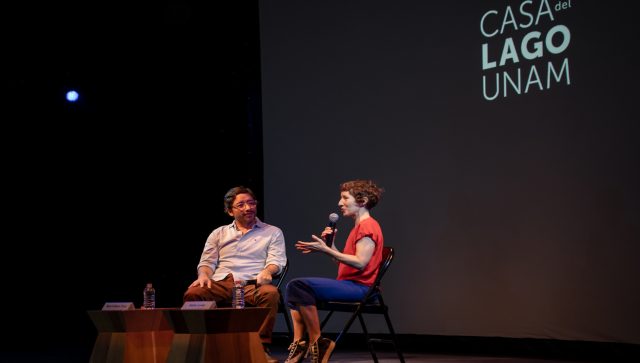
Cinthya García Leyva is a researcher and cultural manager born in Mexico City. Since 2020, she is the General and Artistic Director of Casa del Lago UNAM, where she promotes interdisciplinary and intermedia practices. She has been the Artistic Director of Poesía en Voz Alta Festival at that institution for six years. She holds a Master’s Degree in Comparative Literature from UNAM and is a doctoral candidate. She has curated projects and lectured at institutions in the Americas and Europe; her research, focused on sound and experimental poetics, is published in national and international journals. She co-founded the Art, Science, and Technology Program (ACT), directed the radio series “Islas Resonantes” on Radio UNAM, and is the guest editor and author of the prologue to La materia del sonido (Gris Tormenta).
Tamsin Hong is a contemporary international art curator based in London, specialising in women’s knowledge systems and embodied practices. Born on unceded Ngunnawal Country in the land now known as Australia, Hong is Exhibitions Curator at Serpentine where her projects include Arpita Singh: Remembering (2025), Yinka Shonibare CBE: Suspended States (2024) and Georg Baselitz: Sculptures 2011-2015 (2023). She was formerly Assistant Curator at Tate, specialising in performance, African, and Australian acquisitions. Hong co-curated the land-rights exhibition, A Year in Art: Australia 1992 and performances including Lee Mingwei’s Our Labyrinth and the 2020 Live Exhibition, Our Bodies, Our Archives.
Ruba Katrib is the Chief Curator and Director of Curatorial Affairs at MoMA PS1, New York, where she oversees the museum’s curatorial program and serves on the leadership team. At PS1, she has organized exhibitions including Ayoung Kim: Delivery Dancer Codex (2025), The Gatherers (2025), Rirkrit Tiravanija: A LOT OF PEOPLE (2023), Jumana Manna: Break, Take, Erase, Tally (2022), Frieda Toranzo Jaeger: Autonomous Drive (2022), Greater New York (2021), Niki de Saint Phalle: Structures for Life (2021), Simone Fattal’s retrospective (2019), as well as solo exhibitions by Edgar Heap of Birds (2019), Karrabing Collective (2019), Fernando Palma Rodríguez, and Julia Phillips (2018). From 2012 to 2018, Katrib was Curator at SculptureCenter, New York, where she organized over twenty exhibitions, including 74 million million million tons (2018, co-organized with artist Lawrence Abu Hamdan), and solo shows by Carissa Rodriguez, Kelly Akashi, Sam Anderson, Teresa Burga, Nicola L., Charlotte Prodger, Rochelle Goldberg, Aki Sasamoto, Cosima von Bonin, Anthea Hamilton, Araya Rasdjarmrearnsook, Magali Reus, Gabriel Sierra, Erika Verzutti, and David Douard. In 2018, Katrib co-curated SITE Santa Fe’s biennial, Casa Tomada, with José Luis Blondet and Candice Hopkins.
Valentinas Klimašauskas (b. 1977, Lithuania) is curator, writer, and director of the Contemporary Art Centre, Vilnius since January 2025. Recently, he curated the 1st Klaipėda biennial (2025), the Lithuanian pavilion at the Venice Biennial 2024 (with João Laia, artists: Pakui Hardware and Marija Teresė Rožanskaitė). Together with João Laia Valentinas curated The Endless Frontier, the 14th Baltic Triennial at CAC Vilnius (2021). With Inga Lāce, they curated Saules Suns, a solo exhibition by Daiga Grantina for the Latvian Pavilion at the Venice Biennale (2019). Other recently curated projects include Ocean Eyes, the Coast Contemporary festival in Lofuotta/Láfot/Lofoten Islands (2023); Today, yesterday, tomorrow, a non-commercial part of the ArtVilnius’23; nEYEYEght at Galeria Francisco Fino, Lisbon (2023); Fluid bodies, a series of 5 exhibitions at Nemuno 7, Zapyškis (2022); An Incomplete & Unreliable Guide to Social Media War Room as part of the Curated by festival at Georg Kargl Gallery, Vienna (2021) and The sex lives of fruit flies at Low gallery, Riga (2021). Klimašauskas is the author of Telebodies. Bleeding Subtitles for Postrobotic Scenes (Mousse Publishing, 2024), Polygon (Six Chairs Books, 2018), Oh, My Darling & Other Rants (The Baltic Notebooks of Anthony Blunt, 2018), and B (Torpedo Press, 2014).
Luca Lo Pinto is an Italian curator and editor. He was the artistic director of MACRO – Museum of Contemporary Art of Rome from 2020 till 2025. From 2014 till 2019 he worked as curator of Kunsthalle Wien. He is co-founder of the magazine and publishing house NERO. He produced a range of solo exhibitions with artists including Emilio Prini, Simone Forti, Michel Auder, Nathalie du Pasquier, Jason Dodge, Tony Cokes, Friedl Kubelka, Cinzia Ruggeri, Camille Henrot, Olaf Nicolai, Pierre Bismuth, Babette Mangolte, Lawrence Weiner, Gelatin&Liam Gillick, Charlemagne Palestine, Lisa Ponti, Darren Bader as well as publications with Mario Garcia Torres and Mario Diacono. Other curatorial projects include The Screen is a Muscle (Gallerie d’Italia, Turin); I am only the housekeeper, but I don’t know… (Plečnik House, Ljubljana); 16th Art Quadriennale (Palazzo delle Esposizioni, Rome); Le Regole del Gioco (Achille Castiglioni Studio-Museum, Milan); Trapped in the closet (Carnegie Library/FRAC Champagne Ardenne, Reims), Antigrazioso (Palais de Toyko, Paris); AnderSennoSogno (H.C. Andersen Museum, Rome); D’après Giorgio (Giorgio de Chirico Foundation, Rome); Conversation Pieces (Mario Praz Museum, Rome). In 2012 he edited the book Documenta 1955-2012. The endless story of two lovers. He has been a contributor to numerous exhibition catalogues and magazines (Flash Art, Kaleidoscope, Mousse, Purple, Spike, Rolling Stone, All In, Capsule).
Dr. Ivana Marjanović is a curator and author. Born in Belgrade, Yugoslavia, she is based in Innsbruck, Austria. She is the author of the book QueerBeograd Cabaret. A Shared Space between Queer, Anti-Facism and No Border Politics (transcript Verlag, 2024).The focus of her work is on art and cultural production in the contexts of transference of transnational knowledge, migration, the post-Yugoslav space, gender debates and climate change. Since 2019 she works as artistic and managing director of KUNSTRAUM INNSBRUCK. Marjanović graduated in Art History at the Faculty of Philosophy, University of Belgrade, in 2005; in 2017, she received a Ph.D. of Philosophy from the Department for Art and Cultural Studies, Academy of Fine Arts Vienna. Between 2016 and 2018 she worked with Nataša Mackuljak as artistic and managing director of the WIENWOCHE festival for art and activism in Vienna; in 2006, she founded the Kontekst Gallery in Belgrade with Vida Knežević, where she worked as a curator until 2009.
Sarah McCrory is the inaugural Director of Goldsmiths Centre for Contemporary Art (CCA) which opened in 2018. Previously, she directed Glasgow International, a biennial festival of visual art, from 2013-2017, and was curator of Frieze Projects, Frieze 2010-2012, including curating a programme for the Olympic London 2012 Festival. She co-directed Studio Voltaire from 2008-2010 and was a Director of Vilma Gold from 2006-2008. Alongside these roles she presently curates the Monteverdi Gallery in Tuscany, and works as a consultant curator for LYRA Art Foundation. She sat on the Turner Prize jury in 2014, the board of Studio Voltaire, and was a founder, and subsequent board member of Open School East, London/Margate.
João Mourão and Luís Silva are a curatorial duo whose practice began in 2009, when they co-founded
Kunsthalle Lissabon as a platform for experimental institutional models. They were the curators of the
Portugal Pavilion at the 59th edition of the Venice Biennale (2022) with Vampires in Space, a solo project by Isadora Neves Marques. A selection of recent projects they have curated includes solo exhibitions by Inês Zenha (CA2M, Madrid, Spain), Mounira Al Solh (Serralves Museum, Porto, Portugal), Jonathas de Andrade (CRAC Alsace, Altkirch, France), and Manuela Solano (Pivô, São Paulo, Brazil), among others. As co-directors of Kunsthalle Lissabon, they have presented solo exhibitions by June Crespo, Saodat Ismailova, Teresa Solar, La Chola Poblete, Sara Sadik, Gabriel Chaile, Sheroanawe Hakihiiwe, Ad Minoliti, Zheng Bo, Laure Prouvost, Caroline Mesquita, Sol Calero, Petrit Halilaj, and Naufus Ramírez-Figueroa, among many others. Alongside their curatorial practice, they contribute regularly to various publications and have edited several monographs.
Paula Nascimento (Luanda, 1981) is an architect and independent curator based in Luanda. Her work engages with visual art and cultural practices, working at the intersection of visual arts, urbanism, geopolitics, and arts education. A significant aspect of her practice engages interdisciplinary methodologies and a focus on contemporary readings of historical themes in and around Africa and the global south. She is an associate curator of the VI and VII Lubumbashi Biennial and has developed projects and curated exhibitions internationally at Venice Architecture Biennial, Venice Art Biennial, Rencontres de Bamako – African Biennale of Photography, Experimenta Design, Triennale Milano, among others. Between 2022 and 2025 she was the Chair of the artistic committee at Nesr Art Foundation, curator of African Section at Arco Lisboa, a curatorial advisor to Hangar – Centre of Artistic Research and a member of Acquisitions committee of CAM – Modern Art Centre at Calouste Gulbenkian Foundation. Paula has been appointed Curator of the 17th Sharjah Biennial and been awarded the Golden Lion for best national participation at the Venice Biennale in 2013 and several other awards.
Gabi Ngcobo is Curator and Director of Kunstinstituut Melly, Rotterdam. In January 2024, she joined Kunstinstituut Melly in Rotterdam as its director. At Melly, she continues to foster critical dialogue, collective learning, and new forms of artistic collaboration.Before joining Melly, Gabi was Curatorial Director at the Javett Art Centre at the University of Pretoria (Javett-UP), where she played a key role in reimagining the institution as a “living academy.” Through exhibitions such as Handle with Care (2021) and Scenorama (2022), she activated collection-based research, collective learning, and transnational exchange. Alongside her institutional work, Gabi has developed numerous independent curatorial projects and collaborations across Africa, Europe, and beyond. As a member of the Hartwig Art Foundation commissioning committee (2021–2025), she contributed to the development of new commissions by Nolan Oswald Dennis, Luana Vitra, and Jabu Arnell. Gabi is widely recognised for her commitment to collaborative and experimental curatorial practices. She curated the 10th Berlin Biennale, We Don’t Need Another Hero (2018), and was a co-curator of the 32nd São Paulo Bienal, Incerteza Viva(2016), two landmark exhibitions that challenged dominant narratives and expanded the possibilities of artistic and political imagination.
Leonie Radine is an art historian and has been the curator at the Museion – Museum of Modern and Contemporary Art in Bolzano since 2022.Prior to the solo exhibition of Evelyn Taocheng Wang and a retrospective of the French artist Nicola L. she has (co-)curated numerous group exhibitions, such as Graffiti, RENAISSANCE, HOPE, and Asad Raza: Plot, which featured new site-specific works by BB (Alessandro Bava and Fabrizio Ballabio), Lydia Ourahmane, and Moriah Evans.From 2015 to 2022, Radine worked at the Museum Ludwig in Cologne, where she curated transdisciplinary group exhibitions and collaborated on various projects, including surveys of Wade Guyton and Haegue Yang.She also worked as a guest curator on Flaka Haliti’s exhibition at the National Gallery in Tirana in 2018, as assistant curator on two pavilion exhibitions of Maria Eichhorn (2022) and of Heimo Zobernig (2015) at the Venice Biennale and an author for international art magazines such as Mousse.
Michael Raymond is Curator at Yorkshire Contemporary where he’s curating the 2025 Turner Prize at Cartwright Hall, Bradford. Previously he was Curator, International Art at Tate Modern where he worked on acquisitions, collection displays and exhibitions, including Philip Guston (2023), Cezanne (2022) and Nam June Paik (2019). He recently worked with Steffi Klenz on her exhibition An Alluring Maquette (2024) at NOUA as part of Bodø’s European Capital of Culture programme. Also he worked at the British Museum on exhibitions including Manga (2019), Rodin and the Art of Ancient Greece (2018), Hokusai (2017) and coordinated the Asahi Shimbun Displays.
Margriet Schavemaker, photo : Anne Claire de Breij
Based in The Hague, Prof.dr. Margriet Schavemaker received her education as an art historian and philosopher at the University of Amsterdam. She specializes in modern and contemporary culture and museums. Counterculture, feminism, new media, and diversity and inclusion are at the heart of her multidisciplinary practice, which largely encompasses the making of exhibitions, public programs, and publications, as well as writing, lecturing, and media appearances. Since 2024, she is General Director at the Kunstmuseum Den Haag. In this capacity she is also responsible for the Fotomuseum Den Haag, KM21 and the Escher Museum. In this capacity she is also responsible for the Fotomuseum Den Haag, KM21 and the Escher Museum. Since 2018, Schavemaker has acted as professor of Media and Art in Museum Practice, part of the Media Studies department at the University of Amsterdam. Previously, as artistic director of the Amsterdam Museum between 2019 and 2024, Schavemaker was responsible for the museum’s collection and programming, with a focus on co-creation, working with artists, and decolonizing the museum. As such, she co-initiated discouraging the term “Golden Age” as a synonym for the 17th century. The polyvocal exhibition The Golden Coach (2021 – 2022) and its accompanying publication (WBooks) continued to stir the debate on how to deal with contested heritage. Between 2009 and 2019, Schavemaker oversaw various departments within the Stedelijk Museum Amsterdam.
Fabian Schöneich serves as Executive & Artistic Director of CCA Berlin – Center for Contemporary Arts, which he founded in 2022. Prior he was the Curator of Portikus in Frankfurt (2014–18) and worked as an Assistant Curator at Kunsthalle Basel and Kunstinstituut Melly (fka Witte de With Center for Contemporary Art) in Rotterdam.
Sumesh Sharma is a Bombay based curator focusing on alternate art histories, socioeconomics, and cultural politics. His work engages with immigrant cultures, vernacular modernism, and Black consciousness. He curated Dak’Art 2016 and presently works on an extensive research project on aesthetics and its new philosophical bearings that emerge from India & Africa. He recently curated Mind’s Cupboards, a retrospective of the artist Lalitha Lajmi at the National Gallery of Modern Art, Mumbai in 2023. He co-founded the Clark House Initiative in 2010 with Zasha Colah. He has been a resident at the Latvian Contemporary Art Centre (Riga), Manifesta Online Residency (San Art, Vietnam), Cites des Arts (Paris), Art Sonje Center (Seoul), Asia Cultural Center (Gwangju), Gwangju Biennale Curators Course (Korea), Sao Paolo Biennale, Museum of Contemporary Art (Santa Barbara), Kadist Art Foundation, ISCP New York, Ekalokam Trust for Photography (Tiruvannamalai), Iaspis Stockholm (Sweden), College House (Colombo) and was the Independent Curators International fellow for Senegal in 2014 where he researched how the funding mechanisms in culture and institutional support of art institutions utilise the power structures put in place by colonial laws. His artistic practice seeks layers through political materiality and art historical & theoretical failures while discussing the visual as conversations between the views of Cheikh Anta Diop and Dr. BR Ambedkar.
Natalia Sielewicz is an art historian, writer, and Chief Curator at the MSN in Warsaw, Poland, where she has worked since 2011. Her exhibitions and essays focus on feminism, affect culture, biopolitics, and technology. Curated exhibitions include: The Impermanent. Four Takes on the Collection (2025) (co-curated with Sebastian Cichocki, Tomasz Fudala, Magda Lipska, and Łukasz Ronduda), Warsaw under Construction: Museum between the Square and the Palace (2024) (co-curated with Fredi Fischli and Niels Olsen and Tomasz Fudala), Agnieszka Polska. The Thousand Year Plan (2021), Paint, also known as Blood. Women, Affect and Desire in Contemporary Painting (2019), Hoolifemmes (2017), The Dark Arts. Aleksandra Waliszewska and Symbolism of the East and North (2022, co-curated with Alison Gingeras, Ministry of the Interior. Intimacy as Text (2017), Private Settings (2014), Fedir Tetyanych. The Neverending Eye (2022), Bread and Roses. Artists and the Class Divide (2015, with Łukasz Ronduda).
Eszter Szakács is researcher and curator at de Appel, Amsterdam. She is a curator and researcher based in Amsterdam. She is currently a curator at de Appel, Amsterdam, where she also served as Interim Artistic Director between October 2025 and March 2026. Her practice engages with group-based forms of organizing and curating, with the aim of connecting people and initiatives on a longer-term basis. She has been involved in several collaboratively curated biennials and grassroots projects, including as Curator of the Guest Programme of the 41st EVA International – Ireland’s Biennial of Contemporary Art, together with the EVA Team (2025); as a curatorial team member of the second (2017) and third (2021) editions of OFF-Biennale Budapest and of OFF-Biennale’s participation in documenta fifteen as a lumbung member (2022). Her practice-based research focuses on grassroots art organizing. She is a member of the IMAGINART research group as a PhD candidate at ASCA of the University of Amsterdam. Together with Naeem Mohaiemen, she co-edited Solidarity Must Be Defended (2023), an anthology of visual arts projects exploring solidarity, realized and failed, during the Cold War. From 2011 to 2020, she worked as a curator and editor at tranzit.hu in Budapest, where, among others, she curated the Budapest premiere of Naeem Mohaiemen’s Two Meetings and a Funeral (2018), co-edited the online international journal Mezosfera (2016–2020), and edited the collaborative Curatorial Dictionary (2012–2018).
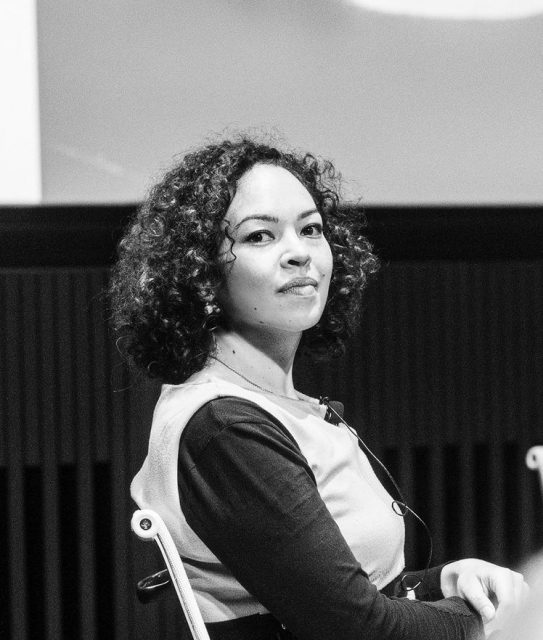
Claire Tancons
Invited in 2018
Claire Tancons, photo : Marlon James
Franz Thalmair
Invited in 2024
Franz Thalmair is a curator, editor, and arts writer based in Vienna, Austria. Curator for contemporary art, mumok – Museum moderner Kunst Stiftung Ludwig Wien, Vienna (2019–2026) | Artistic co-director and curator, Kunstraum Lakeside, Klagenfurt (2018–2026) | Curatorial director of the arts-based research project originalcopy. Post-digital Strategies of Appropriation, University of Applied Arts Vienna (2016–2019) | Managing curator, Secession, Vienna (2010–2014) | Contributor to media such as Artforum, Frieze, KUNSTFORUM International, springerin – Hefte für Gegenwartskunst, Camera Austria, Eikon as well as numerous contributions to exhibition catalogues and artists’ books.
Reiko Tsubaki is curator. Tsubaki joined Mori Art Museum in 2002. At Mori Art Museum, she curated Medicine and Art (2010) Universe and Art (2016)(2017 toured to the ArtScience Museum in Singapore) Leandro Elrich (2017) Roppongi Crossing (2019), STARS (2020-2021), Our Ecology (2023-2024) Louise Bourgeois (2024-2025) and The Architecture of Sou Fujimoto (2025). For other projects, she introduced Ho Tzu Nyen, Tala Madani, Camille Henrot, Takata Fuyuhiko, Cyprien Gaillard, Cao Fei and Yamauchi Shota. She also curated MAM Research 006: Chronicle Kyoto 1990s,MAM Research 011: Tokyo Underground 1960-1970s. Outside the museum, she curated The Cosmos as Metaphor (Kyoto, 2012), Duality of Existence: Post Fukushima (NY, 2014) and Body, Love, Gender (Seoul, 2023). Visiting professor at Seian University of Art and Design (2013-2014) and a part-time lecturer at Aoyama Gakuin University (2019-2023). She also writes, lectures and judges.
X Zhu-Nowell is curator, writer, and institutional practitioner based between Shanghai and New York.
Their is Executive Director and Chief Curator of the Rockbund Art Museum (RAM), Shanghai. Their practice is shaped by relational authorship and an ontological approach to curating that resists demands for coherence, instead working through contradiction, displacement, and the labor of (mis)translation. Zhu-Nowell’s work examines how exhibitions, institutions, and publics are continually reshaped by globalism, migration, and the hidden infrastructures of cultural exchange—particularly in the long aftermath of twentieth-century geopolitical crises. Zhu-Nowell lectures internationally on curatorial practice, institutional form, and transnational histories of art, and has contributed writings to catalogs, journals, and experimental publishing platforms. They regularly collaborate with artists such as Wang Shui, Irena Haiduk, Wu Tsang, Tosh Basco, Shubigi Rao, Ming Wong, Cici Wu, Diane Severin Nguyen, Evelyn Taocheng Wang, Kandis Williams, 44 Monthly, Wong Kit Yi, and Jota Mombaça, among others. Prior to joining RAM, Zhu-Nowell was a curator at the Solomon R. Guggenheim Museum, New York (2014–2021). Their exhibition Wu Tsang: Anthem was named one of the best exhibitions of 2021 by The New York Times, and they were part of the curatorial team for Art and China after 1989: Theater of the World.
Vivian Ziherl
Invited in 2026
Vivian Ziherl, photo : Nikolai Lamburov
Vivian Ziherl is critic, curator, researcher of contemporary art, and Director of Vleeshal Center for Contemporary Art, Middelburg. Raised on Turrbal and Jagera country in Australia, Dr Vivian Ziherl is currently Director of Vleeshal Center for Contemporary Art in Middelburg. Previously, Ziherl was Research and Programs Manager at Kunstinstituut Melly, Rotterdam (2019–2026); founder and director of Frontier Imaginaries (2016–2019); Curator, If I Can’t Dance, I Don’t Want to Be Part of Your Revolution (2012–2014), and Curatorial Assistant and Kunstverein Amsterdam (2011 – 2012). In 2024 Ziherl joined the team of the 24th Biennale of Sydney Ten Thousand Suns, serving as Curatorial Advisor to Artistic Directors Cosmin Costinas and Inti Guerrero and alongside Fondation Cartier Indigenous Fellow Tony Albert. As a freelance curator Ziherl convened Koloa: Women Art and Technology together with Tunakaimanu Fielakepa and Cosmin Costinas (2019–2021), founded Landings (2013-2014) together with Natasha Ginwala, and co-curated the inaugural performance programs of the Stedelijk Museum Amsterdam Stage It! together with Hendrik Folkerts (2011–2012). Ziherl holds a doctorate in Curatorial Studies from Monash University in Melbourne, and with adjunct supervision by Denise Ferreira da Silva.